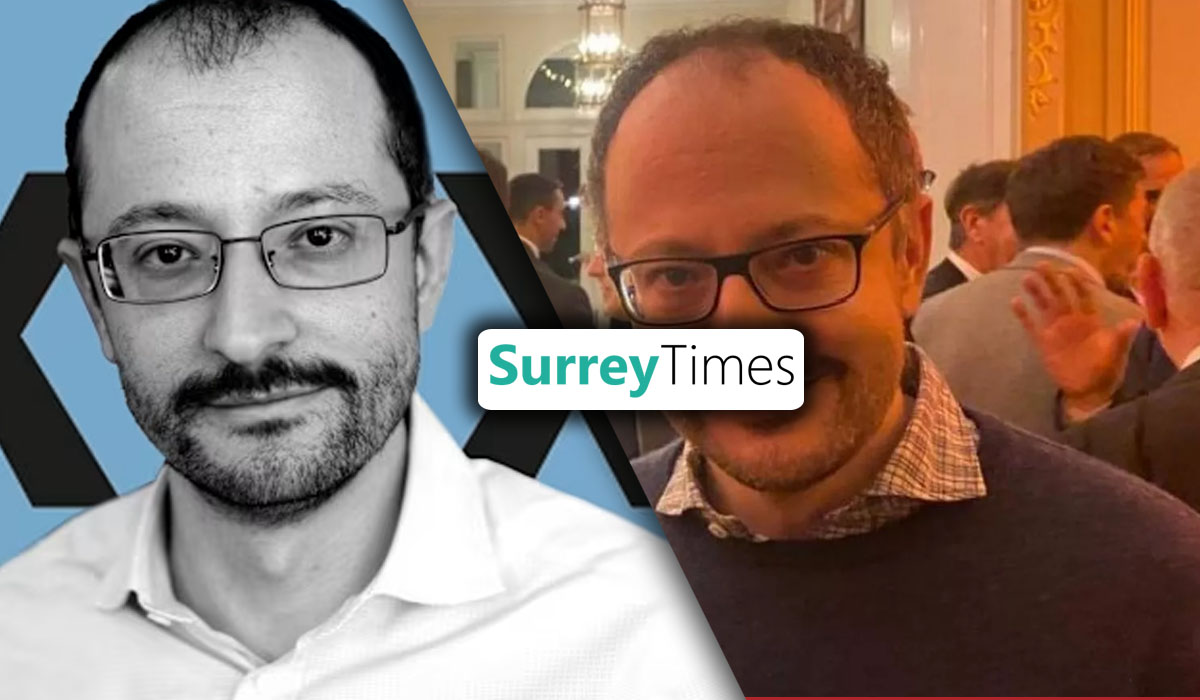
Alex Gerko biography is the story of a mathematician who reshaped global financial markets without seeking public attention. Born in Moscow and trained at the highest levels of mathematical theory, Gerko applied probability, modelling, and computation to one of the most competitive arenas in the world: electronic trading. As the founder of XTX Markets, he built a proprietary market-making firm that now processes hundreds of billions of dollars in daily transactions and competes directly with the world’s largest investment banks.
Unlike traditional financiers, Gerko did not rely on leverage, outside investors, or speculative bets. Instead, he constructed a system grounded in data, automation, and statistical discipline. Over a decade, this approach transformed XTX Markets into one of Europe’s most profitable private companies and made Gerko one of the United Kingdom’s highest taxpayers. His influence extends beyond finance into education philanthropy, where he has committed substantial resources to improving mathematical literacy and social mobility.
Quick Bio
| Attribute | Details |
| Full Name | Dr. Alex Gerko |
| Date of Birth | 3 December 1979 |
| Place of Birth | Moscow, Russia |
| Nationality | British |
| Education | PhD in Mathematics (Moscow State University); MA in Economics (New Economic School) |
| Profession | Quantitative trader, entrepreneur |
| Known For | Founder and co-CEO of XTX Markets |
| Ownership Stake | ~75% of XTX Markets |
| Net Worth | Estimated multi-billion pounds (largely illiquid equity) |
| Philanthropy | Axiom Mathematics (UK) |
Early Life and Family Background
Alex Gerko was born in Moscow during the final decade of the Soviet Union, a period when academic excellence—particularly in mathematics and the sciences—was strongly encouraged. He grew up in a modest household where intellectual discipline and education were prioritised over material ambition. From an early age, Gerko demonstrated exceptional numerical intuition and logical reasoning.
As a teenager, he competed in national mathematics Olympiads, consistently ranking among the top students in the country. These competitions were not merely academic exercises; they formed part of a highly selective system designed to identify and cultivate future scientific talent. This environment shaped Gerko’s thinking style—precise, abstract, and relentlessly analytical—which would later become the foundation of his professional success.
Education and Academic Foundations
Gerko pursued his higher education at Moscow State University, one of the world’s most rigorous institutions for mathematics. There, he completed his bachelor’s, master’s, and doctoral degrees in mathematics, specialising in probability theory and applied mathematical modelling. His academic training focused on uncertainty, stochastic systems, and predictive frameworks—concepts that would later map naturally onto financial markets.
To complement his theoretical background, Gerko earned a Master’s degree in Economics from the New Economic School, Russia’s elite postgraduate institution for quantitative economics. This dual grounding in mathematics and economics gave him a rare interdisciplinary skill set, enabling him to translate abstract models into real-world systems. By the time he left academia, Gerko possessed both the theoretical depth and applied insight needed to operate at the frontier of quantitative finance.
Entry into Finance and Deutsche Bank Career
After completing his academic training, Alex Gerko made a deliberate transition from mathematics into finance, identifying financial markets as complex, data-rich systems ideally suited to quantitative analysis. In 2004, he relocated to London and joined Deutsche Bank, at the time one of the most influential institutions in global capital markets.
Gerko initially worked in equities execution research, where he focused on transaction costs, market microstructure, and algorithmic order execution. As electronic trading expanded, he moved into foreign exchange quantitative trading, developing short-horizon predictive models and automated execution strategies. His work centred on replacing discretionary decision-making with statistically validated models capable of reacting faster and more consistently than human traders.
During his tenure, Gerko gained a reputation as a technically formidable quant, but he also became increasingly sceptical of large-bank constraints. Legacy systems, regulatory friction, and competing internal incentives limited the speed at which innovation could be deployed. These structural limitations would later shape his decision to leave traditional banking altogether.
GSA Capital and the Shift Towards Market-Making
In 2009, Gerko joined GSA Capital, one of London’s most sophisticated quantitative hedge funds. The move marked a decisive step away from investment banking and into a research-driven trading environment. At GSA, he rose to become Head of Foreign Exchange Trading, overseeing systematic strategies across global currency markets.
This period proved formative. While GSA operated as a hedge fund, Gerko became convinced that the most durable opportunity in electronic markets was not directional speculation, but systematic liquidity provision—continuously quoting prices and profiting from small, repeatable inefficiencies at scale. He observed that banks dominated market-making not because of superior models, but because of balance-sheet access and entrenched relationships.
Gerko also encountered the limitations of hedge fund structures. Reliance on external capital, redemption cycles, and investor expectations constrained long-term infrastructure investment. By the early 2010s, he had begun formulating a new model: a firm that combined the scientific culture of a quant fund with the balance-sheet independence of a principal trading business.
Founding of XTX Markets
In January 2015, after six years at GSA Capital, Alex Gerko founded XTX Markets Ltd in London. Backed by a small group of trusted colleagues and seed capital spun out internally, the firm was designed from the outset as a proprietary market-maker, not a hedge fund. It would trade exclusively with its own capital and have no external investors.
The name “XTX” was drawn from algebraic notation, reflecting Gerko’s mathematical background and the firm’s analytical identity. Ownership was deliberately concentrated: Gerko retained roughly 75 per cent of the company, with the remaining equity held by early partners and senior staff. One of the most notable early additions was Zar Amrolia, former global head of FX at Deutsche Bank, who joined as co-CEO and helped establish institutional credibility.
From the beginning, profits were systematically reinvested into research, data acquisition, and computing infrastructure. There was no marketing function, no client fundraising, and no performance pressure from outside stakeholders. This closed, self-financed structure aligned risk, ownership, and innovation—creating a firm that functioned more like a scientific laboratory than a traditional financial institution.
How XTX Markets Works
XTX Markets operates as a technology-driven market-maker, supplying continuous buy and sell prices across global financial markets. Unlike hedge funds that seek directional returns, XTX profits from thin margins applied at extreme scale, capturing small price discrepancies thousands of times per second. The firm trades across foreign exchange, equities, futures, commodities, exchange-traded funds, and selected digital assets.
At the core of this model are probabilistic forecasting systems that process vast streams of real-time and historical data. XTX’s algorithms generate short-horizon price expectations, continuously updating as market conditions evolve. Execution systems then translate these forecasts into automated quoting and hedging decisions, with minimal human intervention. Every model change is validated using out-of-sample testing, reinforcing a culture of empirical discipline.
To support this approach, XTX has built one of the most powerful private computing infrastructures in global finance. The firm reportedly operates tens of thousands of high-performance processors and AI chips, supported by hundreds of petabytes of market data. Substantial resources are devoted to latency optimisation, data engineering, and simulation—areas where incremental improvements can translate directly into competitive advantage.
Growth, Global Expansion and Market Dominance
XTX’s ascent was unusually rapid. Within a year of its founding, the firm entered Euromoney’s Top 10 FX liquidity providers, becoming the first non-bank ever to do so. By 2019, it had emerged as the largest spot foreign-exchange liquidity provider globally, surpassing many established investment banks in electronic market share.
Expansion followed a disciplined pattern. After consolidating its FX leadership, XTX moved into equities, index derivatives, and commodities, applying the same market-making framework across asset classes. Daily trading volumes grew into the hundreds of billions of dollars, with activity spanning more than 30 countries and multiple exchanges.
Geographically, XTX established a US broker-dealer presence in 2017 to access American markets directly. In Europe, the firm opened a major base in Paris following Brexit, ensuring uninterrupted access to EU trading venues while maintaining its headquarters in London’s King’s Cross district. This dual structure allowed XTX to remain both globally integrated and locally compliant.
Market Dominance Without Outside Capital
A defining feature of XTX Markets is its proprietary capital model. The firm operates without external limited partners, venture funding, or sovereign investors. Capital is owned internally and profits are distributed among a small partnership—reportedly around 30 senior members—with Alex Gerko as the dominant shareholder.
This structure enables unusually high reinvestment rates. Rather than paying dividends to outside investors, XTX channels profits back into research, infrastructure, and talent acquisition. Industry estimates suggest annual revenues in excess of £2.5 billion, with profit margins exceeding 50 per cent—figures that place XTX among the most profitable private firms in the United Kingdom.
By avoiding fundraising cycles and investor pressure, XTX can pursue long-term optimisation rather than short-term performance targets. This independence has become a defining advantage, allowing the firm to scale its technological edge while maintaining tight control over risk and strategy.
Alex Gerko Net Worth and Earnings
Alex Gerko’s wealth is directly tied to the performance and ownership structure of XTX Markets. As the firm’s founder and majority shareholder, holding approximately 75 per cent of the company, he receives the largest share of annual profit distributions. Unlike publicly listed executives, his net worth is largely illiquid, concentrated in retained earnings and private equity value rather than salaries or stock options.
In 2024, XTX Markets reported post-tax profits of approximately £1.28 billion, a year-on-year increase of more than 50 per cent. Of this amount, Gerko personally received around £682 million, making him the highest individual taxpayer in the United Kingdom for that fiscal year. Industry estimates place his overall net worth in the multi-billion-pound range, though precise figures vary due to the private nature of the firm.
XTX’s profitability is underpinned by its scale. The company reportedly processes around $250 billion in trades daily, operating on thin but highly repeatable margins. This combination of ownership concentration and sustained profitability has made Gerko one of the wealthiest figures in European finance, despite his near-total absence from public life.
Legal Disputes and Tax Case with HMRC
Gerko’s career has not been without regulatory and legal scrutiny. A prominent issue emerged from his earlier tenure at GSA Capital, relating to the tax treatment of deferred compensation schemes. The dispute centred on whether income allocated to an internal investment vehicle, before later distribution to traders, should be taxed solely at the corporate level or also as personal income.
In 2023, the UK Court of Appeal ruled in favour of HM Revenue & Customs, determining that the deferred payments should be treated as taxable earnings. The decision left Gerko facing an estimated £22.5 million tax liability, which he argued amounted to double taxation. The ruling was significant for the quantitative finance industry, clarifying how unconventional compensation structures are treated under UK tax law.
Despite the loss, Gerko publicly acknowledged his tax obligations and has remained transparent about his contributions. His openness, combined with the scale of his overall tax payments, has earned him a reputation as a compliant—if occasionally controversial—figure within Britain’s financial system.
Leadership Style and Company Culture
Alex Gerko’s leadership philosophy reflects his academic background. At XTX Markets, decision-making is model-driven, empirical, and iterative. Every trading strategy and system modification is tested rigorously using historical simulations and live out-of-sample validation before deployment. Human discretion is minimised in favour of statistically provable outcomes.
The firm maintains a deliberately lean structure, employing fewer than 400 people worldwide. Its workforce is heavily skewed toward mathematicians, physicists, computer scientists, and data engineers recruited from elite institutions. Compensation is closely linked to long-term profitability rather than short-term gains, reinforcing a culture of stability and permanence.
Errors are treated as data problems rather than personal failures. This approach fosters continuous improvement and reduces behavioural bias—one of the core risks in financial decision-making. Under Gerko’s direction, XTX has evolved from a founder-led start-up into a mature institution governed by systems rather than personalities.
Philanthropy and Axiom Mathematics
Beyond finance, Alex Gerko has emerged as a significant philanthropic figure in the United Kingdom, with a primary focus on mathematics education. Through his UK-registered charity Axiom Mathematics—formerly known as the Mathematics Education for Social Mobility and Excellence Trust—he funds initiatives aimed at improving mathematical attainment among students from underrepresented and disadvantaged backgrounds.
The charity supports teacher training, curriculum development, and advanced learning programmes designed to foster mathematical curiosity rather than rote learning. By 2024, Gerko’s donations to Axiom and related educational initiatives were estimated to be in the tens of millions of pounds, placing him among the most substantial private contributors to UK education.
Gerko has stated that his long-term objective is to make mathematics “part of Britain’s national identity,” reflecting his belief that quantitative literacy is essential not only for economic competitiveness but also for social mobility. To manage his personal investments and philanthropic activities, he also established a family office, Cromulon Capital.
Personal Life, Citizenship and Public Image
Alex Gerko is known for maintaining an unusually low public profile for someone of his financial standing. He avoids social media, rarely gives interviews, and is seldom photographed in public settings. Colleagues describe him as precise, private, and intensely focused on work rather than status or visibility.
In 2022, Gerko renounced his Russian citizenship and became a British citizen, a decision that aligned his personal identity with the country in which he built his career and business. He spends most of his time in London, often working from XTX Markets’ headquarters, and appears infrequently at public events—typically academic conferences or education-focused forums.
His lifestyle is frequently characterised as restrained and functional, reinforcing the perception of a founder more interested in systems and outcomes than personal branding.
Influence on Modern Global Finance
The impact of Alex Gerko extends beyond XTX Markets’ balance sheet. His firm represents a broader structural shift in global finance: the rise of non-bank electronic market-makers powered by data, automation, and proprietary capital. XTX’s success challenges the historical assumption that liquidity provision must be dominated by large investment banks.
By consolidating ownership, research, and execution under one roof, XTX avoids many of the conflicts of interest that have traditionally existed in the financial industry. Its model—private, self-financed, and scientifically governed—has become a blueprint for a new generation of quantitative trading firms across Europe, North America, and Asia.
Regulators increasingly view firms like XTX as systemically important due to their market share, yet Gerko’s emphasis on transparency, compliance, and substantial tax contributions has so far insulated the company from significant political backlash. In this sense, his influence is as much institutional as it is technological.
Conclusion
Alex Gerko’s biography illustrates the transformation of modern finance from intuition-driven trading to computation-led systems. Trained as a mathematician and guided by empirical discipline, he built XTX Markets into one of the most profitable and technologically advanced trading firms in the world—without external capital, public listing, or personal publicity.
His legacy is not defined solely by wealth, but by structure: a firm designed around data integrity, long-term thinking, and intellectual rigour. Through philanthropy and education, Gerko has also sought to extend the benefits of mathematical thinking beyond markets, positioning knowledge—not speculation—as his most enduring contribution.
FAQs
Who is Alex Gerko?
Alex Gerko is a British quantitative trader and entrepreneur, best known as the founder and co-CEO of XTX Markets.
What is Alex Gerko famous for?
He is known for building XTX Markets into one of the world’s largest non-bank market-making firms using proprietary algorithms.
What is Alex Gerko’s net worth?
His net worth is estimated in the multi-billion-pound range, largely derived from his ownership stake in XTX Markets.
Is XTX Markets a hedge fund?
No. XTX Markets is a proprietary trading and market-making firm that trades exclusively with its own capital.
Why is Alex Gerko important in finance?
He helped shift market-making power away from banks toward technology-driven, data-centric firms.
What philanthropy does Alex Gerko support?
He funds mathematics education initiatives in the UK through his charity, Axiom Mathematics.
Read More Articles at Surreytimes
Leave a Reply